
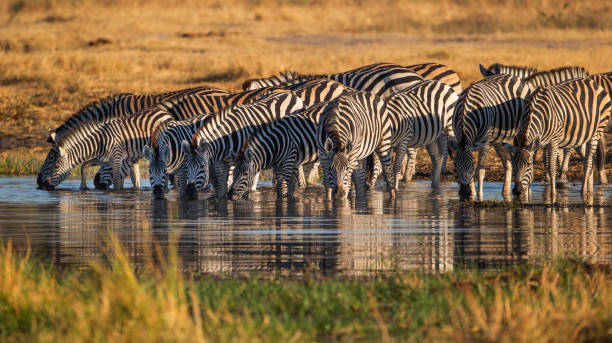
The first step in understanding how to see the Great Migration in Serengeti is to avoid thinking of the migration as a single event on one particular date.
The herds are constantly moving through different parts of the ecosystem. Their exact position varies from year to year because rain patterns and grazing conditions influence the speed and direction of movement.
This is why a traveler visiting in February may need a very different safari itinerary from someone traveling in August.
A February migration safari is typically planned around the southern plains and Ndutu area, while an August safari is often focused farther north toward Northern Serengeti.
Great Migration Route Through Serengeti
Best Time to See the Great Migration in Serengeti
| Period | Typical Migration Area | Main Safari Interest |
|---|---|---|
| December - March | Southern Serengeti and Ndutu region | Large herds and typical calving-season opportunities |
| April - May | Southern, central and westward-moving areas | Herd movement as grazing conditions change |
| May - July | Western and central-western Serengeti | Migration movement toward the Western Corridor |
| July - October | Northern Serengeti | Large herd concentrations and possible Mara River crossings |
| October - December | Northern, eastern and southward-moving areas | Herds gradually returning toward the southern ecosystem |
January to March: Southern Serengeti and Calving Season
The early part of the year is commonly associated with the southern Serengeti ecosystem and the Ndutu plains.
Fresh grass following seasonal rains can attract large concentrations of wildebeest and zebra into the southern grasslands.
This period is especially well known for the wildebeest calving season. Travelers visiting during this period may have opportunities to observe large breeding herds, newborn animals and predator activity.
Wildlife sightings are natural events and cannot be guaranteed, but the southern ecosystem is an important area to consider for a Great Migration safari during these months.
Plan more safari time in the southern Serengeti ecosystem rather than concentrating only on the far north.
This period is commonly associated with calving and large herd concentrations.
Accommodation location is important because shorter driving distances can provide more time for game viewing.
April to May: Herds Begin Moving North and West
As seasonal conditions change, the migration generally begins moving away from the southern plains.
The herds can spread across wide areas, and their exact position can become more difficult to predict.
Central Serengeti can play an important role during transition periods, especially when groups of wildebeest are moving through different parts of the ecosystem.
April and May are also often wetter months in northern Tanzania, so travelers should prepare for rain, softer roads and changing safari conditions.
May to July: Western Corridor and Grumeti Area
During the middle part of the year, migration movement is commonly associated with the western side of the Serengeti ecosystem.
Large groups of wildebeest may move through areas connected with the Western Corridor as they continue north.
The Grumeti region is often discussed in relation to this stage of the migration.
Travelers specifically interested in this period should consider an itinerary that allows enough time in western or central-western Serengeti rather than using a safari designed for the northern river crossing season.
July to October: Northern Serengeti and Mara River
Northern Serengeti becomes particularly important during the later dry-season migration period.
Herds can gather in the northern plains while moving between grazing areas on both sides of the Tanzania-Kenya border.
The Mara River is one of the best-known features associated with this stage of the migration.
Travelers may have opportunities to observe wildebeest approaching, gathering near or crossing the river.
Mara River Crossings Cannot Be Scheduled
A river crossing is a natural wildlife event. Even when large herds are present near the Mara River, there is no reliable way to know the exact hour or day when a crossing will occur.
- Herds may wait near the river for long periods.
- Animals can approach the river and then move away.
- Crossings can happen at different locations.
- Rainfall can change migration timing.
- Wildlife behavior cannot be controlled by safari guides.
Spending several nights in Northern Serengeti generally provides more opportunities to search for the herds than making only a very short visit, but sightings and crossings are never guaranteed.
October to December: Migration Returns South
After spending time farther north, migrating herds generally begin moving back through the Serengeti ecosystem as seasonal rains create fresh grazing farther south.
The exact route can vary significantly according to rainfall.
During this transitional period, a flexible safari itinerary can be particularly useful because the herds may be distributed across a broad area.
Where to Stay for a Great Migration Safari
| Travel Period | Suggested Safari Region | Reason |
|---|---|---|
| January - March | Southern Serengeti / Ndutu area | Typically closer to early-year herd concentrations and calving activity. |
| April - May | Central or transitional migration areas | Herds may be moving across wider parts of the ecosystem. |
| May - July | Western / Central-Western Serengeti | Better positioned for typical Western Corridor movement. |
| July - October | Northern Serengeti | Commonly used for Mara River and northern migration safaris. |
| October - December | Flexible central, eastern or northern/southern transition | Herd location can depend strongly on current rainfall. |
How Many Days Do You Need for a Great Migration Safari?
Can focus on one Serengeti region when your travel dates and target migration area are already well matched.
Provides more time for game drives and allows the itinerary to combine migration areas with Central Serengeti.
Provides more time across multiple wildlife areas and can include destinations such as Ngorongoro or Tarangire.
Example Great Migration Safari Planning by Season
| Safari Focus | Suggested Structure | Main Objective |
|---|---|---|
| Calving Safari | Ngorongoro area + southern Serengeti / Ndutu | Focus on typical early-year migration concentrations. |
| Central-Western Migration Safari | Central Serengeti + Western Corridor | Follow typical northwestern herd movement. |
| Mara River Safari | Central Serengeti + Northern Serengeti | Search for northern migration herds and possible river activity. |
| Extended Northern Tanzania Safari | Tarangire + Ngorongoro + Serengeti migration area | Combine migration-focused game viewing with other northern circuit wildlife areas. |
Central Serengeti and the Great Migration
Central Serengeti, particularly the wider Seronera region, is important because of its central position within the park and its resident wildlife.
Depending on the season, migrating herds may move through or near the central region.
Even when the largest migration concentrations are farther north, south or west, Central Serengeti can still provide opportunities to see a broad variety of wildlife.
For this reason, many migration itineraries combine Central Serengeti with the seasonal migration area.
Great Migration Wildlife
Migrating Herbivores
- Wildebeest
- Zebra
- Gazelles and other grazing animals
Herd size and exact species concentrations vary naturally throughout the migration cycle.
Predator Opportunities
- Lions
- Cheetahs
- Leopards
- Hyenas
Predator sightings are possible in the Serengeti ecosystem but cannot be guaranteed on any particular game drive.
How to Increase Your Opportunities to See the Migration
| Planning Strategy | Why It Helps |
|---|---|
| Choose the Correct Serengeti Region | The main herd concentrations can be hundreds of kilometers apart during different times of year. |
| Allow Several Safari Days | More game-drive time gives guides additional opportunities to search different areas. |
| Use Recent Local Information | Migration movement changes, so recent field reports can help guide daily safari planning. |
| Stay Near the Target Area | Reducing long transfers can create more time for wildlife viewing. |
| Remain Flexible | Guides may change game-drive direction according to recent herd movement. |
| Do Not Plan Around One Exact Crossing Time | River crossings are unpredictable natural events. |
Great Migration Safari Accommodation
Accommodation location can have a major effect on a migration safari.
Staying far from the seasonal herd area can require long morning and evening drives, reducing the amount of time available for wildlife viewing.
Mobile Migration Camps
Some seasonal camps relocate or operate in areas chosen to remain relatively close to expected migration movement.
Permanent Tented Camps
Permanent safari camps can provide comfortable bases in selected Serengeti regions throughout their operating seasons.
Safari Lodges
Lodges are available in several Serengeti regions and can be combined with migration-focused game drives depending on location.
Private vs Group Great Migration Safari
| Feature | Private Safari | Group Safari |
|---|---|---|
| Vehicle | Used by your own travel party | Shared with other participants |
| Daily Planning | Greater flexibility within the confirmed itinerary | Follows a shared schedule |
| Migration Search | Guide can focus the vehicle around your group's priorities | Game-drive priorities are shared with the group |
| Cost Structure | Vehicle and guide costs are shared only within your party | Selected safari costs are shared among participants |
What to Pack for a Serengeti Migration Safari
Safari Essentials
- Lightweight comfortable clothing
- Warm layer for cool mornings
- Sun hat
- Sunglasses
- Sunscreen
- Comfortable closed shoes
- Reusable water bottle
Photography & Viewing
- Camera
- Spare batteries
- Memory cards
- Binoculars
- Phone charger or power bank
- Lens cleaning materials
Great Migration Safari Planning Mistakes to Avoid
- Booking Northern Serengeti during a month when your main objective is the southern calving season.
- Assuming the migration remains permanently in Central Serengeti.
- Expecting a Mara River crossing at a specific hour or day.
- Spending too little time in the target migration area.
- Choosing accommodation very far from the expected herd location.
- Treating monthly migration maps as guaranteed schedules.
- Focusing only on the migration while ignoring other Serengeti wildlife opportunities.
Great Migration and Ngorongoro Safari Combination
A Serengeti migration safari can be combined with the Ngorongoro area to create a broader northern Tanzania wildlife itinerary.
The exact route depends on the season. Early-year safaris can work particularly well with southern Serengeti or Ndutu-focused planning, while northern migration safaris generally require more travel time to reach the far north of Serengeti.
Additional destinations such as Tarangire or Lake Manyara can also be added depending on the number of safari days available.
How to Choose Your Great Migration Safari Month
| Your Main Interest | Typical Period to Consider | Area to Discuss When Planning |
|---|---|---|
| Calving Season | Approximately January - March | Southern Serengeti / Ndutu region |
| Moving Herds | Approximately April - June | Central and western migration areas |
| Western Corridor | Approximately May - July | Western Serengeti |
| Mara River Opportunities | Approximately July - October | Northern Serengeti |
| Southward Migration | Approximately October - December | Flexible itinerary based on current herd movement |
How to See the Great Migration in Serengeti FAQs
What is the best month to see the Great Migration in Serengeti?
There is no single best month for every traveler. The best period depends on whether you want opportunities to see the calving season, moving herds, the Western Corridor or possible Mara River crossings.
Where is the Great Migration from January to March?
The migration is typically associated with the southern Serengeti and Ndutu region during much of the early-year period, although exact herd locations vary.
When is the wildebeest calving season?
Calving activity is commonly associated with the early-year period in the southern Serengeti ecosystem. Exact timing and locations vary with natural conditions.
When can I see Mara River crossings?
Northern Serengeti is commonly visited for possible Mara River crossings during the July to October period, but crossing dates and times cannot be predicted or guaranteed.
Are Mara River crossings guaranteed?
No. Herds may remain near the river, change direction or cross at different locations and times.
Can I see the Great Migration in Central Serengeti?
Migrating herds can move through central areas during parts of the annual cycle, but the largest concentrations may be elsewhere depending on the season.
How many days should I spend in Serengeti?
The ideal duration depends on your itinerary, but multiple days in the target migration area generally provide more opportunities for game viewing than a very short visit.
Should I stay in Northern Serengeti for river crossings?
Northern Serengeti is normally the appropriate region to consider when your main objective is possible Mara River activity during the typical northern migration period.
Can I combine Serengeti and Ngorongoro?
Yes. Serengeti migration safaris are commonly combined with the Ngorongoro area as part of a northern Tanzania itinerary.
Can I combine the Great Migration with Tarangire?
Yes. Tarangire can be added when the itinerary has enough days for both Serengeti migration viewing and additional northern Tanzania wildlife areas.
Is a private safari better for migration tracking?
A private safari provides greater flexibility within the confirmed itinerary because the vehicle is dedicated to your own party, while shared safaris follow group arrangements.
Can guides know exactly where the migration is?
Guides can use recent local information and field observations to plan game drives, but the herds are continuously moving and exact wildlife locations can change.
Do wildebeest migrate alone?
The migration commonly includes large numbers of wildebeest together with zebra and other grazing animals moving through the wider ecosystem.
Can wildlife sightings be guaranteed?
No. Wildlife is free-ranging, so specific sightings, herd sizes, predator encounters and river crossings cannot be guaranteed.
Plan Your Serengeti Great Migration Safari
Send Epic Summit Safaris your travel month, number of travelers, preferred safari duration and accommodation style. We can design your itinerary around the Serengeti region that typically offers the most suitable migration opportunities during your travel period.