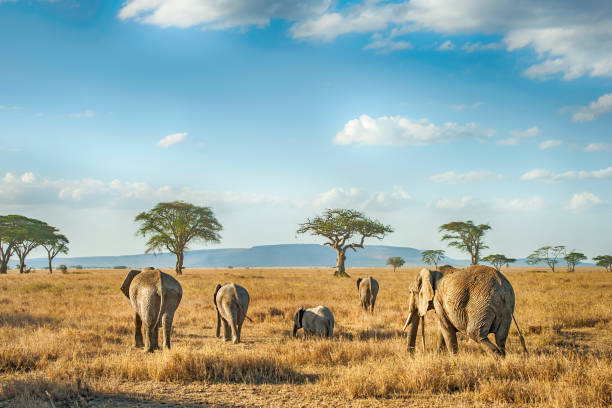
Serengeti National Park offers rewarding wildlife viewing throughout the year. Resident lions, leopards, cheetahs, elephants, buffaloes, giraffes, hippos, hyenas, antelopes, and numerous birds remain within the ecosystem during every season.
The best month depends on what you want to experience. Travelers interested in dry conditions may prefer June through October, while photographers seeking green landscapes and dramatic skies may prefer the rainy or transitional months.
Great Migration locations are not fixed. Wildebeest, zebras, and gazelles move according to rainfall, fresh grazing, water availability, and natural behavior rather than following exact calendar dates.
Best Serengeti Safari Seasons
Dry Season
June to October Popular for wildlife and comfortable conditionsVegetation becomes thinner, water sources become more important, and wildlife may be easier to observe in many areas.
- Generally dry safari conditions
- Cooler mornings and evenings
- Popular travel period
- Higher accommodation demand
- Possible western or northern migration activity
Green Season
November to March Ideal for scenery, calves, birds, and photographyShort rains refresh the plains, creating green landscapes, seasonal flowers, dramatic skies, and increased bird activity.
- Green grass and clearer landscapes
- Possible southern migration herds
- Wildebeest calving season
- Excellent birdwatching
- Periods of rain are possible
Long-Rain Season
April to May Best for fewer visitors and possible valueThese months generally receive heavier rainfall, although conditions vary between regions and individual days.
- Fewer safari vehicles
- Green and dramatic landscapes
- Possible accommodation offers
- Muddy roads may occur
- Some camps may close seasonally
Best Time for the Great Migration
The Great Migration is a continuous movement of wildebeest, zebras, and gazelles through the Serengeti–Mara ecosystem. The animals move in search of fresh grass and water, creating different safari opportunities throughout the year.
The most suitable travel month depends on whether you want to see calving, large herds on open plains, movement through the Western Corridor, or possible river crossings in northern Serengeti.
| Period | Possible Migration Area | Potential Experience |
|---|---|---|
| January to March | Southern Serengeti and Ndutu | Green plains, large herds, newborn calves, and possible increased predator activity. |
| April to May | Central and western routes | Herd movement through green landscapes, fewer visitors, and changing seasonal conditions. |
| June to July | Western Corridor and northern routes | Moving herds and possible river activity depending on rainfall and herd locations. |
| August to October | Northern Serengeti | Large herds and possible Mara River crossings, although crossings cannot be predicted or guaranteed. |
| November to December | Central, eastern, or southern routes | Herds may move south as short rains create fresh grazing across the plains. |
Best Time for Wildebeest Calving
January through March is commonly selected for the wildebeest calving season in the southern Serengeti and Ndutu region. The plains may support large concentrations of wildebeest, zebras, and gazelles when rainfall creates fresh grazing.
Newborn animals may attract lions, cheetahs, hyenas, jackals, and other predators. However, no birth, hunt, predator sighting, or large herd concentration can be guaranteed on a specific day.
February is often regarded as an important calving month, but timing changes according to rainfall, grazing conditions, and natural animal behavior.
Best Time for River Crossings
Travelers interested in possible river crossings commonly visit between July and October. During this period, migration herds may move through western or northern Serengeti and approach the Grumeti or Mara river systems.
River crossings are unpredictable. Herds may wait near the river for hours or days, cross in a different location, turn away, or cross when no safari vehicles are nearby.
Spending several nights in the correct region increases flexibility but does not guarantee that a crossing will occur during your visit.
Choose Your Travel Period by Safari Interest
- Choose June to October for generally dry conditions
- Choose January to March for calving-season travel
- Choose July to October for possible northern crossings
- Choose November to March for greener scenery
- Choose April or May for fewer safari vehicles
- Choose November to April for migrant bird species
- Choose shoulder months for a balance of cost and crowds
- Allow several days when migration viewing is important
Serengeti Month-by-Month Guide
Green landscapes and possible migration herds in southern Serengeti or Ndutu.
Popular for possible wildebeest calving, large herds, and predator activity.
Green plains, young animals, warm conditions, and possible seasonal rainfall.
Long rains may begin, bringing fewer visitors and vivid green scenery.
Rain may continue while migration herds begin moving toward central or western areas.
Drier conditions develop, and herds may move through the Western Corridor.
Popular dry-season month with possible western or northern migration activity.
Northern Serengeti may host large herds and possible Mara River activity.
Dry conditions, strong wildlife viewing, and possible northern migration herds.
The dry season may continue before short rains begin in parts of the ecosystem.
Short rains refresh the plains and may encourage herds to move southward.
Green scenery returns, with possible herds in central, eastern, or southern areas.
Serengeti Weather by Season
| Season | Typical Conditions | Safari Considerations |
|---|---|---|
| June to August | Generally dry, with cool mornings and warmer afternoons. | Pack warm layers for early game drives and dusty-road protection. |
| September to October | Dry and increasingly warm before the short rains. | Popular wildlife-viewing period with high visitor demand. |
| November to December | Short rains with sunny intervals and greener scenery. | Carry light rain protection and expect changing road conditions. |
| January to March | Warm temperatures, green plains, and occasional rain. | Suitable for southern Serengeti and calving-season itineraries. |
| April to May | Higher rainfall, cloudy periods, and lush vegetation. | Some roads may become muddy and selected camps may close. |
Best Time for General Wildlife Viewing
June through October is often selected for general wildlife viewing because vegetation may be shorter and animals can gather around permanent water sources.
However, Central Serengeti contains resident wildlife throughout the year. Lions, leopards, cheetahs, hyenas, elephants, giraffes, buffaloes, hippos, crocodiles, and antelopes may be encountered during both dry and wet seasons.
A longer stay usually provides more benefit than choosing a particular month but spending only a few hours inside the park.
Best Time for Photography
Dry-Season Photography
June to October offers open landscapes, easier wildlife visibility, golden grass, and generally clearer travel conditions.
Green-Season Photography
November to March provides green plains, dramatic clouds, seasonal flowers, young animals, and colorful birdlife.
Rainy-Season Photography
April and May may provide dramatic skies, fewer vehicles, reflective roads, and rich landscape colors.
Best Time for Birdwatching
Serengeti supports numerous resident bird species throughout the year. Birdwatching may become particularly rewarding during the greener months when migratory species, breeding activity, insects, and seasonal water sources increase.
November through April is often preferred by birdwatchers, though exact migration and breeding patterns vary according to rainfall and habitat conditions.
Cheapest Time for a Serengeti Safari
April and May may offer lower accommodation prices at selected lodges and camps because visitor numbers are generally lower. November and early December may also provide shoulder-season value at some properties.
Lower prices are not guaranteed. Seasonal pricing differs between properties, and certain camps may close temporarily during the long rains.
Peak-Season Travel
- Generally higher accommodation prices
- Greater demand for popular camps
- More safari vehicles in famous areas
- Early reservations recommended
- Limited room availability may occur
Low or Shoulder Season
- Possible accommodation offers
- Fewer vehicles in some areas
- Green landscapes and active birdlife
- Rain and muddy roads are possible
- Some seasonal camps may be unavailable
Best Serengeti Region by Month
| Months | Suggested Region | General Reason |
|---|---|---|
| January to March | Southern Serengeti and Ndutu | Possible calving herds, green plains, predators, and young animals. |
| April to May | Central or western Serengeti | Resident wildlife, greener landscapes, and possible migration movement. |
| June to July | Western Corridor or northern routes | Possible herd movement and seasonal river activity. |
| August to October | Northern Serengeti | Possible large herds and Mara River crossing activity. |
| November to December | Central, eastern, or southern Serengeti | Short rains, fresh grazing, and possible southward herd movement. |
How Many Days Should You Spend in Serengeti?
Most travelers should spend at least three or four days in Serengeti. Travelers following migration herds or visiting remote northern and southern regions may benefit from four to six days.
A seven-to-ten-day Tanzania safari can combine Serengeti with Tarangire, Lake Manyara, and Ngorongoro Crater while maintaining a reasonable travel pace.
Three Days
Suitable for a focused Central Serengeti visit with one full game-drive day and shorter arrival and departure drives.
Four to Five Days
Recommended for most travelers because it provides several game drives and greater regional flexibility.
Six Days or Longer
Suitable for photographers, migration-focused trips, and itineraries combining different Serengeti regions.
What to Pack for Each Season
Dry-Season Packing
- Warm fleece or jacket
- Lightweight neutral clothing
- Sun hat and sunglasses
- Sunscreen and lip balm
- Dust protection for cameras
- Comfortable closed shoes
- Reusable water bottle
Wet-Season Packing
- Light rain jacket
- Quick-drying clothing
- Water-resistant footwear
- Waterproof camera protection
- Insect repellent
- Warm layer for mornings
- Soft-sided travel bag
Frequently Asked Questions
What is the best month to visit Serengeti?
The best month depends on your interests. February is popular for possible calving, while July through October may suit dry weather and northern migration travel.
Is Serengeti good throughout the year?
Yes. Serengeti contains resident wildlife throughout the year, although weather, migration locations, road conditions, prices, and visitor levels change seasonally.
What is the best time for the Great Migration?
Migration wildlife can be present within different Serengeti regions throughout the year. The best period depends on whether you want calving, moving herds, or possible river crossings.
When is the wildebeest calving season?
Calving is commonly associated with January through March in southern Serengeti and Ndutu, with February often receiving particular interest.
When can I see river crossings?
Possible crossing activity is commonly associated with July through October in western or northern Serengeti. No crossing can be predicted or guaranteed.
Is the rainy season a bad time for Serengeti?
No. The rainy season offers green landscapes, fewer visitors, birdwatching, dramatic photography, and possible lower prices, though roads may become muddy.
What is the cheapest month to visit Serengeti?
April and May may offer lower prices at selected properties, but rates and seasonal closures vary between lodges and camps.
Is December a good time for Serengeti?
Yes. December may provide green scenery, changing migration locations, active resident wildlife, and occasional short rains.
Is February a good time to visit?
February is a popular period for southern Serengeti and Ndutu because of possible calving herds, green plains, and predator activity.
Is August a good month for Serengeti?
August is popular for dry-season wildlife viewing and possible migration activity in northern Serengeti.
How many days do I need in Serengeti?
Three days are a practical minimum, while four to five days are recommended for most travelers. Migration-focused safaris may require additional time.
Can I avoid safari crowds?
Traveling during April, May, November, or selected shoulder periods may reduce visitor numbers, although conditions and camp availability vary.
Can the safari region change with the season?
Yes. Accommodation and game-drive regions can be selected according to expected migration locations, weather, road conditions, and wildlife reports.
Can the itinerary start from Zanzibar?
Yes. Domestic flights can connect Zanzibar with Arusha, Kilimanjaro, or selected Serengeti airstrips.
Plan Your Serengeti Safari at the Best Time
Choose the dry season for classic wildlife viewing, the green season for calving and photography, or a migration-focused itinerary designed around expected seasonal herd movements.
For a personalized recommendation, provide your travel month, available days, number of adults and children, accommodation category, arrival point, budget, and preferred wildlife experience.
Request Your Safari
.png)
.png)